Background: A month ago, I had the honor of testifying before the United States House of Representatives Subcommittee on Delivering on Government Efficiency (DOGE) for the hearing, “Playing God with the Weather – A Disastrous Forecast,” chaired by Rep. Marjorie Taylor Greene (R–GA-14). The topic of the hearing was weather modification and geoengineering.
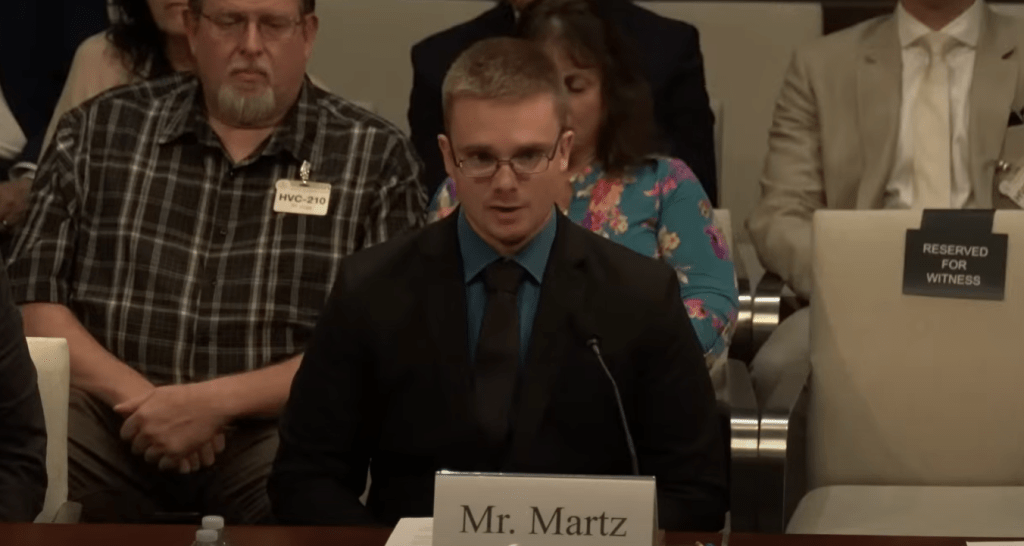
I testified alongside fellow “majority witness” Dr. Roger Pielke, Jr., Senior Fellow at the American Enterprise Institute, and “minority witness” Dr. Michael MacCracken, Chief Scientist for Climate Change Programs at the Climate Institute. At 22 years old, I am probably one of, if not the youngest scientist to testify before Congress. The fact that I had the privilege to share the stage with two highly respected career specialists, and that the hearing went well—all things considered—is definitely something to be proud of.
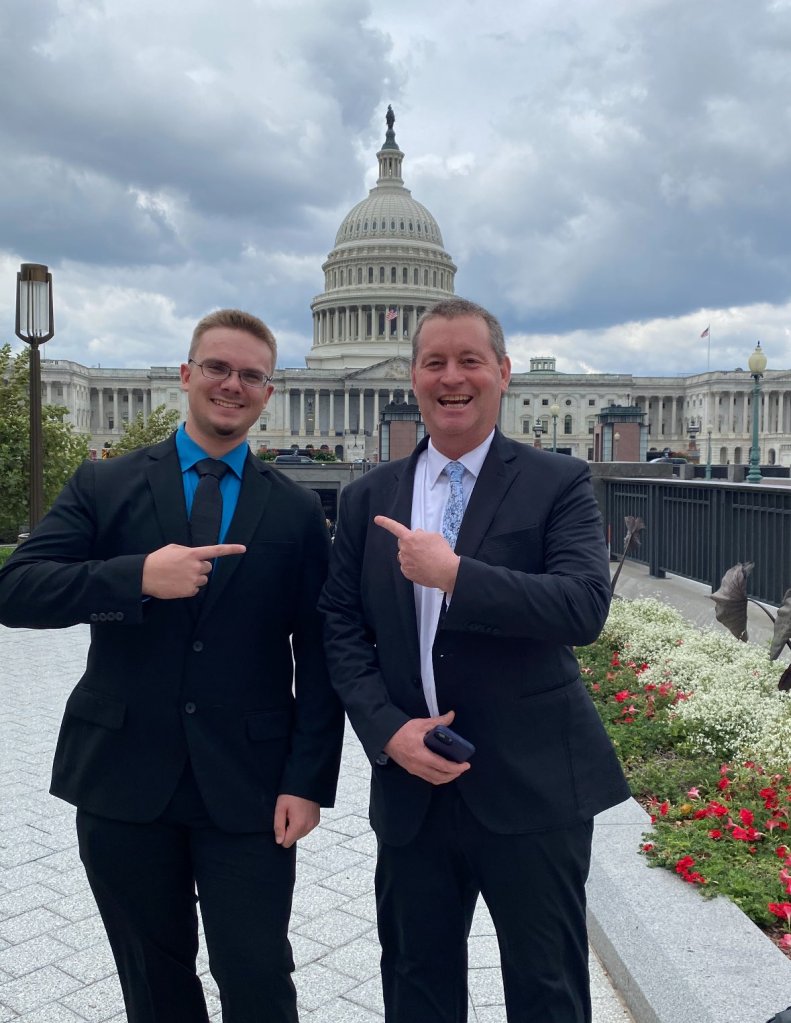
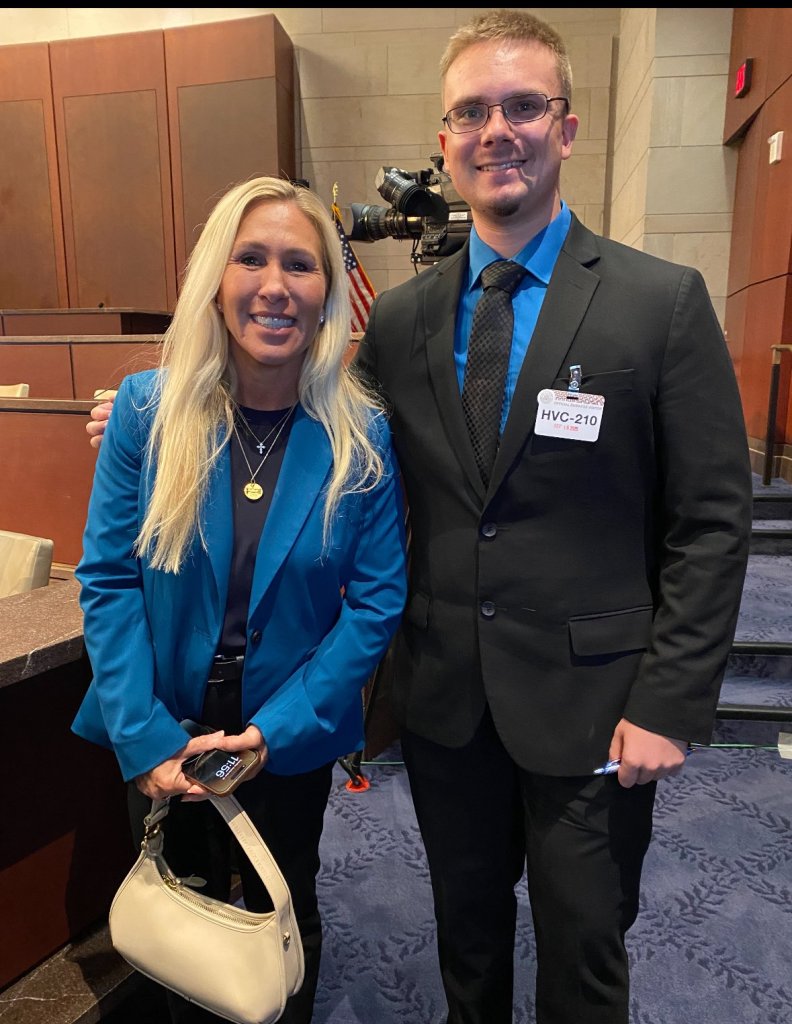
Before the hearing commenced, Ranking Member Melanie Stansbury (D–NM-1) greeted each of the witnesses, myself included, and shook our hands. She was very cordial, and admittedly, probably the most science-oriented member of Congress in attendance (and I say that as someone who is by no means “liberal”). Indeed, Rep. Stansbury raised valid arguments throughout the hearing, specifically about the importance of having an Environmental Protection Agency (EPA) and the need for continued support of scientific research (though, personally, I have argued that we ought to collectively move away from taxpayer-funded research and adopt a crowdsourcing model, such that scientific research results aren’t biased towards a specific policy outcome). I also had the chance to speak with Chairwoman Greene after the hearing for a few minutes. Though punctual when the cameras are rolling, she is a lot more intelligent and open-minded off camera than most of her critics and even her own social media postings let on.
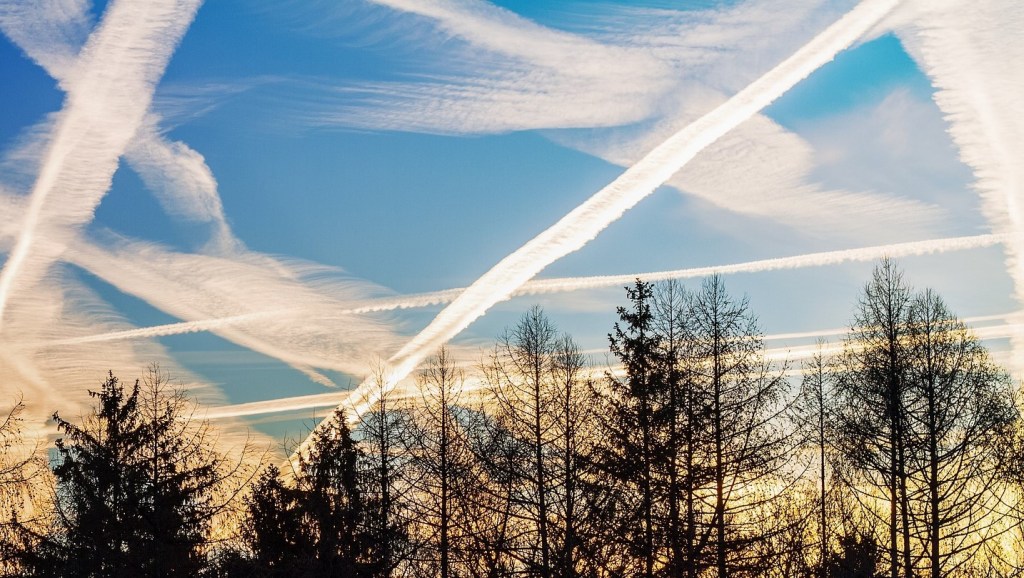
The hearing clarified everything laypeople need to know about weather modification and geoengineering, and my written testimony is easily accessible online for anyone to read, but I continue to receive a steady stream of comments from people asking me to comment on these topics, as well as requests for commentary on photos of ominous-looking cloud formations in the sky. While a lot of people try to link these peculiar formations to cloud seeding and/or geoengineering projects, they are in fact three distinct [and largely unrelated] things. Rather than waste time replying to every comment or writing yet another lengthy thread, my explainer below will serve as my future go-to reference.
Carry on. . .
In the internet age with a wealth of information available at everyone’s fingertips, one would think that humans have evolved past dark age superstition, particularly as it pertains to the weather. However, the advent of social media in the 2000s allowed likeminded people to more easily find each other and congregate in sheltered circles without being challenged by others with differing points of view.
Alarmingly, yet perhaps unsurprisingly, there has been a significant increase in the number of people who claim that world governments are secretly controlling large-scale weather patterns, poisoning us by spraying toxic chemicals into the atmosphere, or “blocking out the sun,” among other things. Photographs or videos of ominous line-shaped clouds forming behind jet aircraft are shared to social media and have spearheaded claims that governments are engaging in nefarious practices. These cloud formations, known as “condensation trails,” have been dubbed “chemtrails” by purveyors of this conspiracy theory. And, this conspiracy theory is not just believed by a small group of outcasts—it is actually echoed by a rather large faction of the political right (although, I have, on occasion, stumbled upon a handful of individuals on the left who also believe in such theories).
In general, I am not against conspiracy theories, no matter how ridiculous many of them may be. There are indeed people, often government officials, who conspire individually or with each other to do all sorts of things for malicious purposes all the time, and try to bury the evidence, sometimes successfully until it is uncovered or declassified decades later. While I think that most conspiracy theories are ridiculous, there are a few that I find to be plausible, or at the very least, interesting.
For example, I am convinced that the U.S. government has been involved in a number of assassinations of certain political figures, most notably that of President John F. Kennedy in Dallas, Texas on November 22, 1963, although there is no material evidence that has been declassified to suggest that government officials had any involvement. More recently, social media users, myself included, were called “conspiracy theorists” for suggesting that the COVID-19 virus may have originated from a lab leak in Wuhan, China. But by March of this year, even The New York Times admitted that scientists knew early on that the virus probably originated from the lab.
So, while conspiracies do exist, not everything unusual that happens is a result of a conspiracy. Sometimes, reality is just boring.
Condensation trails: The meteorology and chemistry
Condensation trails (or often called “contrails” for short or “vapor trails”) are high-altitude line-shaped ice crystal cloud streaks that form in the wake of passing overhead fixed-wing aircraft (Fig. 1). All clouds that form in the lower atmosphere are made up of either tiny liquid droplets, supercooled liquid (water that is below freezing, but remains in the liquid state) droplets, or ice particles. Clouds with vertical extent (e.g., cumulonimbus) are often mixed phase such that the bases are made up of liquid droplets and the cloud tops are ice.
Contrary to popular misconception, clouds are NOT made up of water vapor (which makes “vapor trail” a misnomer). Water vapor (H2O), like most gases, is actually invisible to our eyes because the vapor molecules do not absorb and reflect photons of light in the visible part of the electromagnetic spectrum (radiation with wavelengths of 0.4-0.7 μm). However, sufficient amounts of water vapor must be present in the atmosphere in order for clouds to form. The primary source of water vapor needed for contrail formation is the exhaust from jet fuel combustion.
When jet fuel combusts, it produces byproducts including carbon, hydrogen and other compounds such as soot. Hydrogen and carbon react with oxygen in the atmosphere to produce water vapor and carbon dioxide (CO2), respectively. In fact, you might be surprised to learn that 1 kilogram (kg) of jet fuel (typically kerosene) produces 1.2-1.4 kg of water and 3.2-3.4 kg of CO2. The proof of this can be seen in Box 1.
Box 1 | The Chemistry
The general combustion reaction for a hydrocarbon is:

Where n is the number of carbon atoms and m is the number of hydrogen atoms
Kerosene is a mixture of hydrocarbons, primarily alkanes and cycloalkanes, so it does not have a single chemical formula. It typically consists of carbon and hydrogen chains with 10-16 carbon atoms and 22-34 hydrogen atoms, respectively. For simplicity, we can use dodecane (C12H26).
Thus, the carbon atoms produce 12 molecules of CO2 and 13 molecules of H2O. The balanced equation becomes.


Before we can compute how many kg of CO2 and H2O are produced by 1 kg of C12H26, we must first calculate the molar masses of dodecane and combustion byproducts. Molar mass, M, can be found by multiplying the number of atoms of element i, ni, by its atomic mass, Ai.
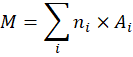
Therefore,

Next, we need to figure out how many moles of C12H26 are in 1 kg of C12H26. To do this, we divide the mass, m, by molar mass, M:

Where m = 1 kg = 1,000 grams
Since 1 mole of C12H26 produces 12 moles of CO2 and 13 moles of H2O, then 1 kg of C12H26 produces 70.44 moles of CO2 and 76.31 moles of H2O.
Thus, 1 kg of jet fuel produces ~3.36 kg of CO2 and ~1.27 kg of H2O.

Aircraft cruising altitude is generally between 30,000 and 40,000 feet (~9,000 and 12,000 meters) and the air temperature at such heights typically hovers somewhere between -22°F and -49°F (-30°C and -45°C). At such temperatures, the equilibrium vapor pressure—the vapor pressure (i.e., the partial pressure in a volume of mixed gases exerted by only the water vapor molecules) at which the air is in thermodynamic equilibrium—is so low that it does not take much vapor for the air to reach saturation. At saturation, the relative humidity is 100%, such that there is as much water vapor condensing as there are liquid droplets vaporizing. This is referred to as “thermodynamic equilibrium.” Any excess vapor added into that parcel of air must condense. That is how clouds form.
The soot particles emitted in the exhaust lower the equilibrium vapor pressure by providing a surface for water vapor produced during combustion to easily condense onto. In cloud physics, this is called the “solute effect” (see pages 8-9 in my cloud physics course notes for more details on this). In the absence of these nuclei, relative humidity would have to climb upwards of 400% before vapor condensed. If that were the case in the real atmosphere, we wouldn’t have clouds at all. Since the vapor exits jet engines at very high concentrations into extremely cold air, there is excess vapor, which must condense. Although condensation is a warming process (remember, latent heat is released from vapor molecules into the surrounding air before the vapor cools and condenses), the air is so cold at cruising altitudes that they rapidly freeze into ice particles, forming jet contrail cirrus. In general, the air temperature must be at least -40°F (-40°C) for them to form, as this is where supercooled liquid water droplets instantly freeze.
The microphysical processes outlined above were first described in detail more than 70 years ago in Appleman (1953).
Contrails aren’t a new phenomenon, but are more common now
As many adults over the age of 40 have correctly pointed out to me repeatedly, these condensation trails (or, as many call them, “chemtrails”) have markedly increased over the last several decades. However, this has misled many to believe that these clouds are a relatively new phenomenon. As it turns out, the actual explanation for this is less exciting.
The reason people have noticed an increase in condensation trails is because there has been a steady increase in jet fuel use that corresponds to increased air traffic as population grows. Today, there are roughly 115,000 flights per day globally, whereas there were virtually none in the early 1940s. Fig. 2 below shows annual production of CO2 and water vapor by aviation since 1940 (Box 2 explains how the values in Fig. 2 were calculated). Author’s note: The dip from 2020 to 2021 was caused by economic slowdown during the COVID-19 pandemic. More than 300 million tons of water are added to the atmosphere each year by aircraft alone. One can reasonably conclude that since much of that vapor condenses, there is going to be a proportional increase in condensation trail formation.
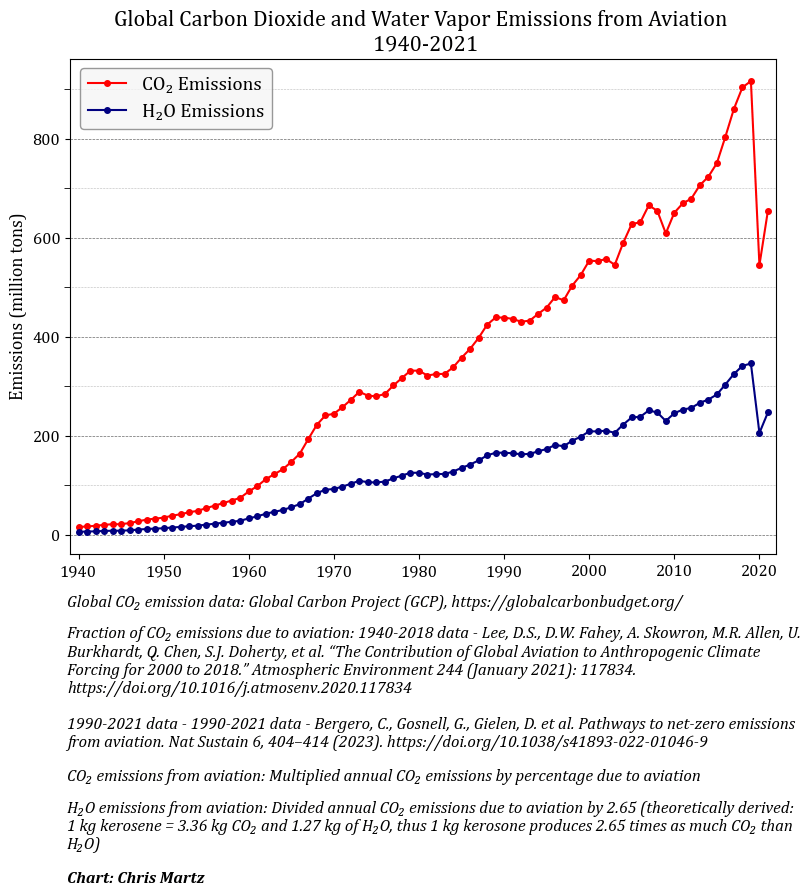
Box 2 | How the data plotted in Fig. 2 was derived
To compute the annual CO2 emissions produced by aviation, I multiplied the global annual CO2 emissions tabulated in the Global Carbon Budget (2024) database by the annual fraction of emissions due to aviation derived in Lee et al., 2021 (1940-2018 data) and Bergero et al., 2023 (1990-2021 data). I then estimated the water vapor emissions by dividing CO2 emissions from aviation by 2.65 (theoretically derived in Box 1) because the production of both gases during combustion are directly proportional to fuel consumption.
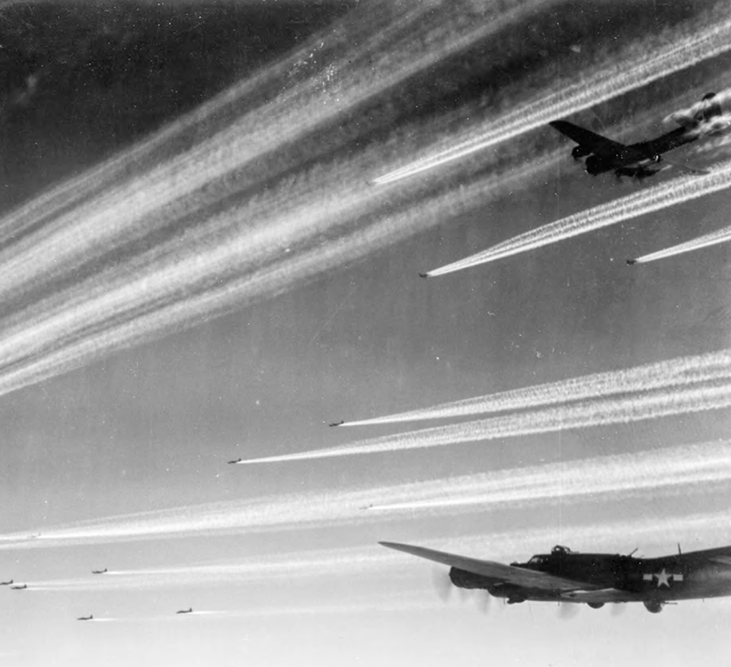
Today, the sky is filled with airplanes, and thus condensation trails are visible daily almost everywhere. In the 1940s and 1950s, they were indeed a rare sight, however, we have video and photographic evidence of them dating back to World War II (Fig. 3). As a matter of fact, condensation trails played an important role in military operations during the war, particularly aerial combat (or “dogfights”). Allied bombers like the B-17 Flying Fortress or Axis aircraft could be spotted from great distances by enemy fighters and ground-based anti-aircraft units due to contrail production.
Why do some contrails dissipate while others spread out?
Another reason why many individuals believe these clouds are being deliberately “sprayed” is because their appearance varies significantly from hour-to-hour and from day-to-day. On some days, even with high air traffic, the sky overhead is perfectly clear, while on other days, the sky is filled with jet contrail cirrus. But, even then, sometimes the contrails dissipate quickly after formation or linger and spread out, covering the entire sky in a thin white veil.
Why is this?
Well, contrail appearance or lack thereof all has to do with variable atmospheric conditions, both spatially and temporally.
Consider the Moderate Resolution Imaging Spectroradiometer (MODIS) satellite imagery of the southeastern United States taken by NASA’s Terra satellite on January 29, 2004 (Fig. 4). Notice that contrails can be seen protruding out from the cirrostratus cloud mass over Alabama and Georgia, crisscrossing the sky over Dixie. Then, notice that the contrails and cirrus gradually stop approaching the border between North and South Carolina, as marked by the yellow line I annotated. Notice also that there are no clouds north of that region. The air at such altitudes was too dry to support cloud formation. If these clouds were deliberately being “sprayed,” they’d appear over North Carolina and Virginia too, as well as over south Florida.
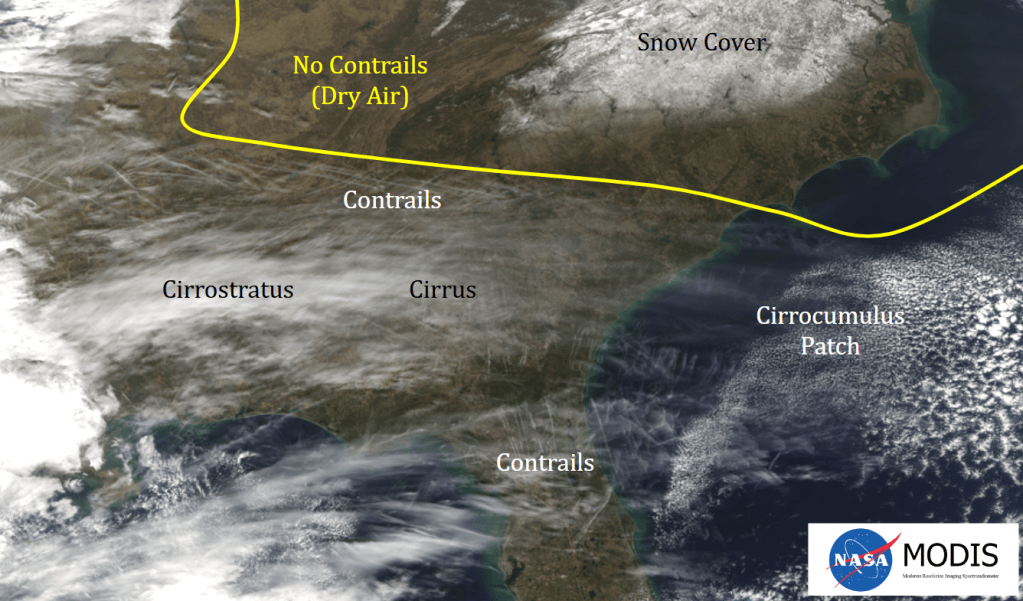
Whether these ice particle clouds form behind airplanes or not depends on how close the atmosphere at 30,000 to 40,000 feet (9,000 to 12,000 meters) altitude is to saturation (recall, saturation is 100% relative humidity) and whether or not the air temperature is at or below -40°F (-40°C). If the local atmosphere is bone dry and/or the air temperature is well above the -40° threshold, jet contrails will not form because the moist exhaust will mix with the drier environmental air through turbulent motions. Conversely, if the relative humidity is high (for sake of argument, say ≥90%) and temperatures are sufficiently low, condensation trails can form as the vapor flux from the jet engine raises the vapor pressure to the equilibrium vapor pressure.
The closer the relative humidity in an atmospheric layer is to 100% before aircraft passes through, the more likely any resulting contrail will persist for several hours. In such cases, the contrail often expands horizontally long after the aircraft has left the area because the ice particles within the cloud tend to attract water vapor molecules from the surrounding air, where they deposit (i.e., instantly go from vapor to solid ice without passing through the liquid phase) onto nearby cloud condensation nuclei. When air traffic is heavy, numerous jet contrails can form, which then expand in size and overspread much of the sky. However, if the relative humidity is lower, contrails will dissipate within minutes of their formation as dry environmental air wraps into the cloud, causing the ice particles to sublimate (i.e., instantly go from solid ice to gas without going through the liquid phase).
Both temperature and humidity can vary greatly from one location to another, both horizontally and vertically. This explains why contrails may appear, disappear and then reappear behind aircraft within a matter of seconds or minutes. It also explains why one airplane might produce a visible trail while another flying nearby at a different altitude produces none at all. If one only has an elementary understanding of meteorology, it is easy to see why so many observers are alarmed when they see these odd cloud formations.
I also occasionally receive comments from individuals claiming that as contrails (or, as they call them, “chemtrails”) grow in size and thickness, they begin to lower and even precipitate. This also reflects a fundamental misunderstanding of meteorology. As shown in Fig. 4 above, contrails typically form within patches of natural cirrus or cirrocumulus clouds. This is expected because all clouds, natural or man-made, require a humid environment to form. Cirriform clouds usually develop ahead of an approaching warm front as positively buoyant warm, moist air slowly ascends over a comparatively denser cold, dry layer adjacent to the Earth’s surface. As the air rises and cools adiabatically, it condenses and forms clouds for hundreds of miles ahead of the front base. Fig. 5 below illustrates this concept nicely.
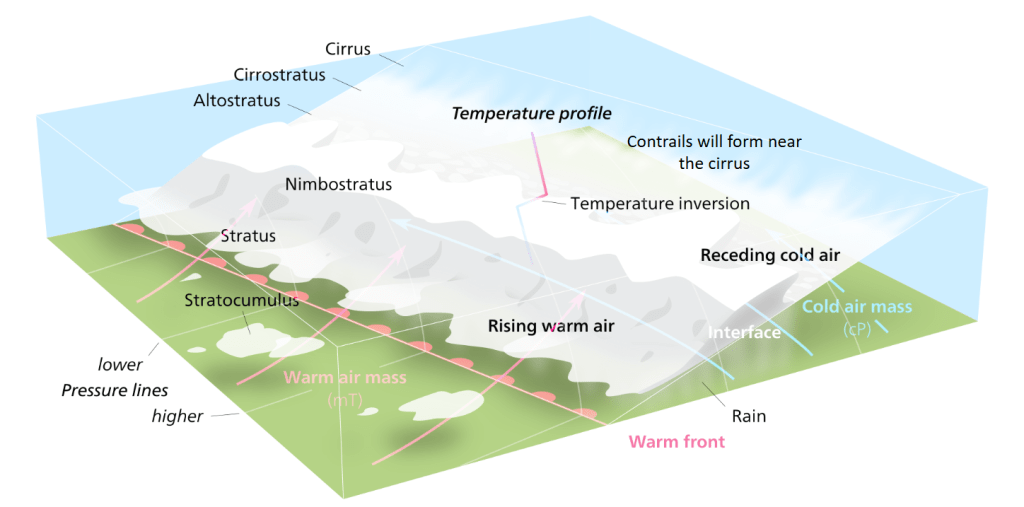
As the warm front advances, the cloud bases lower and thicken. The cloud types that one sees looking up at the sky from a fixed location on the ground will go from thin, high-altitude cirrus and cirrostratus (>4,000 meters / 13,000 feet) to mid-level altostratus (2,000-4,000 meters / 7,000-13,000 feet), which have greater optical thickness. The altostratus further lower and thicken into precipitating nimbostratus and non-precipitating stratus (<2,000 meters / 7,000 feet). If contrails are mixed in with the initial cirriform clouds, then expand as the front approaches, it might give one the impression that the contrails themselves are lowering and producing steady rain or snowfall [injected with noxious chemicals].
Contrails themselves are not really materially different from the visible “car trails” produced by automobile exhaust on very cold mornings. However, the reason why contrails from jet aircraft are far more common than condensation trailing from automobile tailpipes is because the air near the ground is usually much warmer, and therefore more water can evaporate into it without reaching saturation.
But aren’t there chemicals in contrails?
Yes.
If we want to get technical here, everything in the universe that has mass and takes up space (volume) is matter, and all matter is made up of chemicals.
Therefore, all combustion byproducts of petroleum-based fuels are in fact chemical substances. These include the aforementioned primary (complete combustion) byproducts—carbon dioxide (CO2) and water vapor (H2O); secondary (incomplete combustion) byproducts such as carbon monoxide (CO), hydrocarbons, and soot; and trace amounts of nitrogen oxides (NOx), sulfur oxides (SOx) and sulfuric acid (H2SO4). Given that condensation trails contain chemical byproducts of kerosene combustion, one could theoretically refer to contrails as “chemtrails,” but that would not be the best adjective to describe the visible aggregate, which is condensation.
That notwithstanding, are condensation trails proof that governments are engaging in nefarious top-secret chemical “spraying” operations? NO.
What about weather modification? Doesn’t the government control our weather?!
Yes, weather modification is real. However, nothing has been accomplished in terms of weather control because past efforts to attempt doing so have had little, if any, material success. What’s more, weather modification efforts have nothing to do with the visible condensation trails produced by jet aircraft.
The American Meteorological Society (AMS) defines “weather modification” as,
“…any effort to alter artificially the natural phenomena of the atmosphere.”
There are different types of weather modification, but the term primarily refers to the practice of cloud seeding, which involves the addition of tiny particles to clouds to alter the phase and size distribution of cloud droplets with the intention of enhancing precipitation over a localized area. In layman’s terms, the goal is to make existing clouds more efficient at producing rain or snow—not create new clouds.
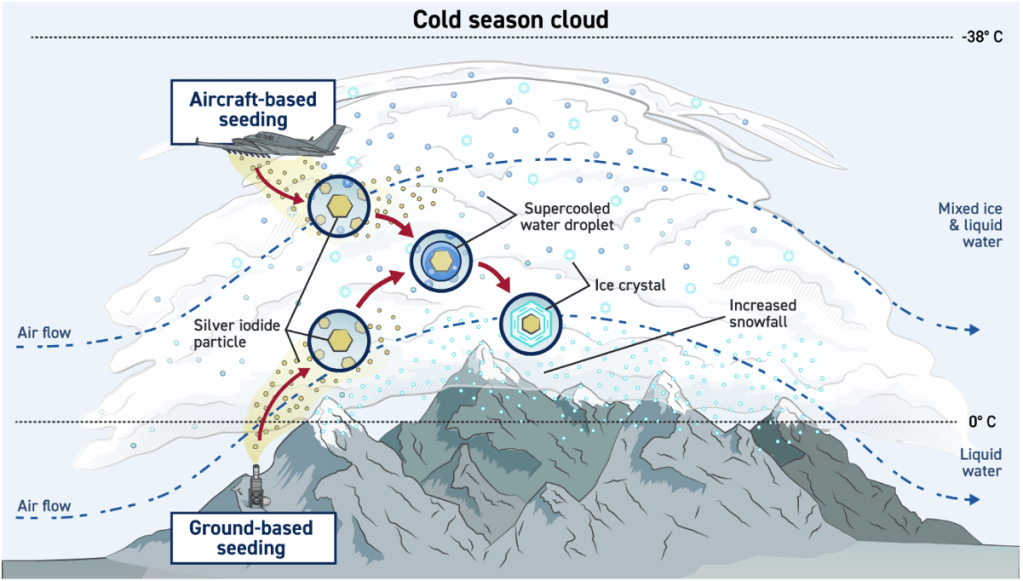
There are two primary methods of cloud seeding: Glaciogenic and hygroscopic:
- Glaciogenic seeding (Fig. 6) – introduction of ice-producing particles such as silver iodide (AgI) and dry ice (solid CO2) into wintertime orographic clouds to accelerate the transition from supercooled liquid water droplets to ice-phase hydrometeors with the intention of increasing snowfall.
- Hygroscopic seeding (Fig. 7) – injection of tiny hygroscopic (water-attracting) cloud condensation nuclei like salt (NaCl) into the base of liquid or mixed-phase convective clouds (e.g., cumulus that grow into cumulonimbus) to increase the concentration of “collector droplets” that fall and coalesce with smaller droplets, forming raindrops.
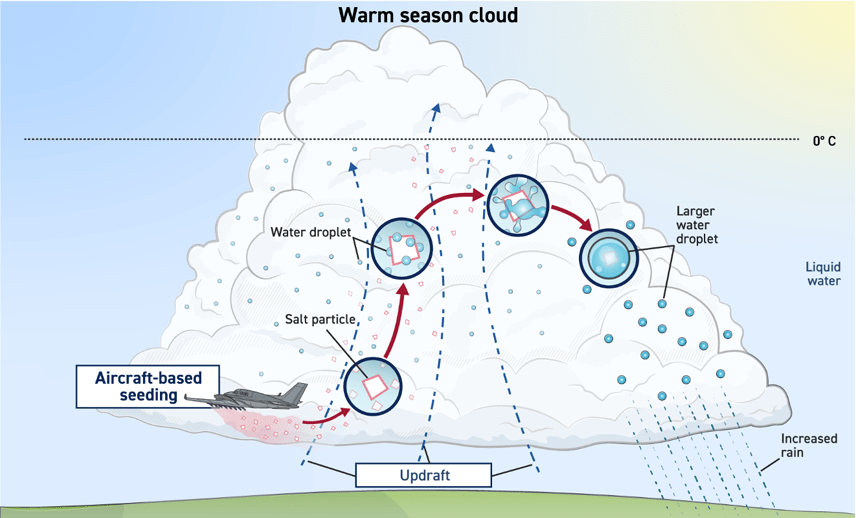
It is important to reiterate here that cloud seeding is done inside existing clouds to make them more efficient at producing precipitation. Cloud seeding is not done to create new clouds. Thus, supposed “chemtrails” are not examples of cloud seeding.
Weather modification has been widely experimented with in the U.S. since the mid-to-late 1940s.
In 1958, Congress amended the National Science Foundation (NSF) Act of 1950 to establish a federal research program “to initiate and support a program of study, research, and evaluation in the field of weather modification,” which became effective in 1959. Interestingly, according to a 1975 report published by the White House Domestic Council,
“After a slow beginning, Federal funding for deliberate weather modification research has increased steadily from $3.7 million in FY 1965 to a peak of $18.7 million in FY 1972. Support for the program decreased 34 percent to $12.4 million in FY 1975.”
– White House Domestic Research Council, December 1975 (p. 14)
Since the mid-1970s peak, federal funding for weather modification has declined to the point that it is virtually nonexistent today. However, a lot of cloud seeding activities are still bankrolled by state and local governments. The National Oceanic and Atmospheric Administration (NOAA) is required by law to maintain a database of all weather modification activities taking place within the U.S. and its territories.
“The Weather Modification Reporting Act of 1972, 15 U.S.C. § 330 et see. requires that all persons who conduct weather modification activities within the United States or its territories report such activities to the U.S. Secretary of Commerce at least 10 days prior to and after undertaking the activities. Failure to report can result in fines of up to $10,000.”
Since 1999, there have been a whopping 1,113 weather modification projects! Thus, despite little federal role in modern cloud seeding activities, there remains heavy state and lower-level involvement.
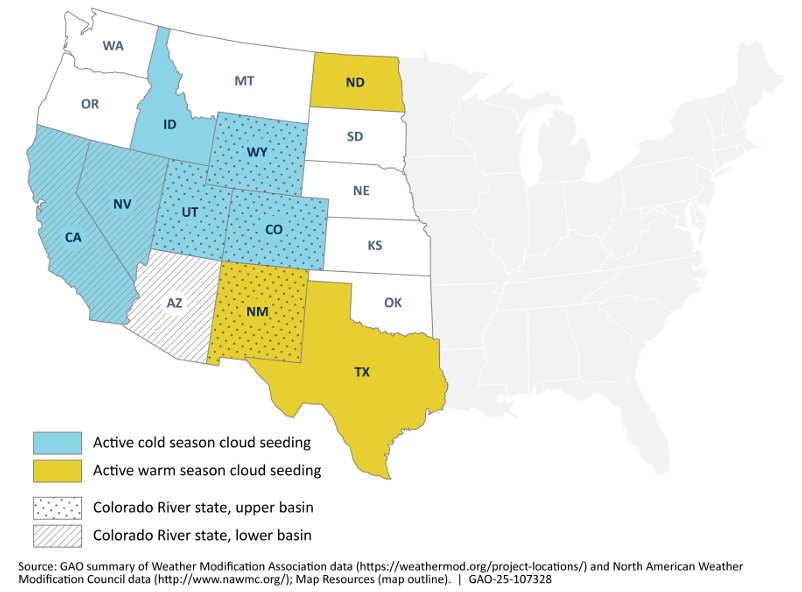
A 2024 report by the Government Accountability Office (GAO) found that there are currently nine U.S. states actively facilitating cloud seeding programs (Fig. 8). These are: California, Colorado, Idaho, Nevada, New Mexico, North Dakota, Texas, Utah and Wyoming. As Fig. 8 below shows, most cloud seeding activities in the U.S. are “cold season” endeavors that are intended to improve wintertime snowpack for water availability in the Intermountain West’s Colorado River Basin, which has been subject to severe drought for much of the last 25 years.
At the federal level, I’ll admit that the government has not always been transparent about weather modification activities. One could reasonably speculate that officials are still not being straightforward today, despite having declassified almost everything from the 20th century and little, if any, federal funding currently being used to fund cloud seeding projects. Although the best evidence we have suggests that no weather modification experiments are being carried out by the federal government in the present day, that has not always been the case.
Project Cirrus (1946-47)
In 1946, Vincent Schaefer, an American chemist and meteorologist who worked at General Electric (GE) Laboratories, discovered that introducing dry ice into environments with supercooled liquid water could get the water to freeze into ice. He hypothesized that doing this in the atmosphere could alter clouds and precipitation via microphysical reactions. He convinced GE Labs to reach an agreement with the Naval Research Laboratory and Army Signal Corps to use Air Force aircraft to experiment on hurricanes. This became known as “Project Cirrus.” By the autumn of 1947, they had secured the aircraft and personnel to test this.
On the evening of October 11 (local time), a category one hurricane (dubbed “King”) moved ashore in southwestern Florida in the Everglades. The storm dumped a torrential amount of rain across the southern tip of the “sunshine state,” before quickly scooting out over the Atlantic Ocean the following morning. Given that the hurricane was tracking due northeast, forecasters expected that “King” would be out of harm’s way and that the seeding experiment could be conducted with no potential drawbacks or public safety risks.
On the afternoon of October 13, two B-17s and a B-29 departed Mobile, Alabama en route to “King” located some 415 miles (~688 km) off the coast of Jacksonville. The first B-17 flew at cloud top level, dumping 80 pounds (~36 kg) of dry ice along a 100-mile (160-km) path. The second B-17 trailed half a mile behind to observe any potential cloud changes. Schaefer himself was carried behind in the B-29 to monitor the operation. After the initial 30-minute run, the pilots circled back and dropped two additional 50-pound (~23-kg) loads into the top of a large cumulus cloud before they finally returned to Mobile.
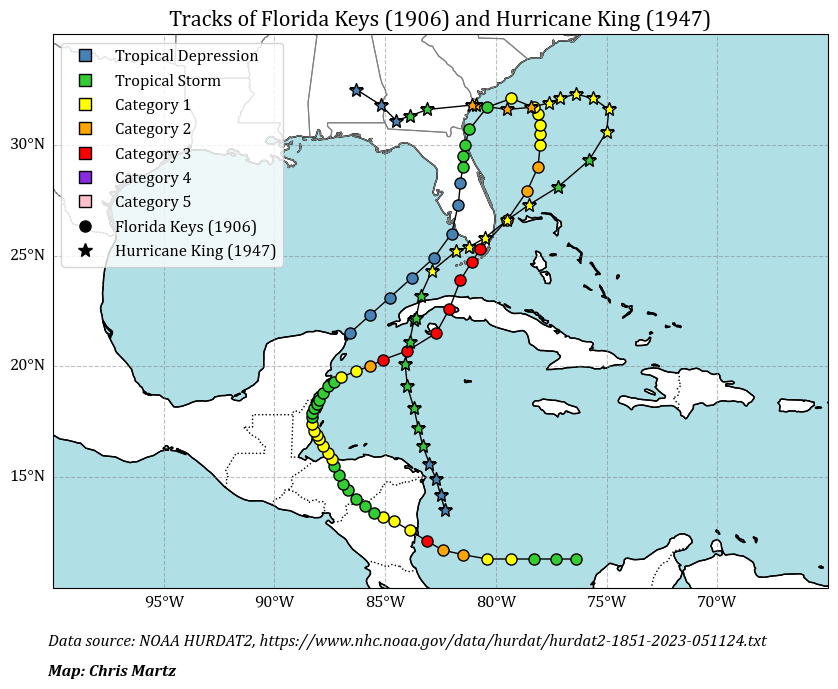
The following day, they flew back out to determine whether or not seeding had been effective. Upon reaching the predicted storm location, the pilots had difficulty locating the eye. Disturbingly, they found that the hurricane’s center was 100 miles to the west of where it was forecast to be, having made a remarkable 135° turn overnight, intensifying into a category two, and was headed towards the Georgia coastline. The next afternoon, “King” made landfall near Savannah (Fig. 9), killing one person and inflicting over $2 million USD in economic damages.
As one can imagine, the public got wind of Project Cirrus and was outraged that the scientists’ meddling had caused the hurricane to change course and strike Georgia. Lawsuits were threatened to be brought against GE. Dr. Irving Langmuir—the head of GE’s laboratories—issued a statement claiming that he was “99% sure” that the hurricane track changed due to cloud seeding, building the public’s case against GE. However, Dr. Francis Reichelderfer of the U.S. Weather Bureau (now the National Weather Service) dismissed Langmuir’s claims, noting that hurricanes can suddenly change course without seeding agents, citing the category three “Florida Keys” hurricane of 1906 as an example (Fig. 9).
Eventually, the Weather Bureau’s case was solid enough that lawsuits were dismissed. As such, the efficacy of cloud seeding was by all accounts poor, and the public lost interest in it for the next 15 years.
Project STORMFURY (1962-83)
In 1962, renewed interest in weather modification sparked the U.S. Weather Bureau and U.S. Department of Defense (DOD) to attempt seeding hurricanes again. The new experimental program, called “Project STORMFURY,” ran for 21 years, ending in 1983. The goal of the project was to attempt weakening tropical cyclones—of which hurricanes are a subset of having a maximum sustained wind speed ≥74 mph (64 knots)—before they made landfall to reduce their destruction potential (Fig. 10).
Specifically, the working theory was that silver iodide, a type of hygroscopic nuclei, could be dropped into the rainbands surrounding the eyewall (the ring of most intense winds encircling the eye) of a tropical cyclone to get the supercooled cloud water to freeze. Latent heating of the air from freezing (recall that cloud droplets must release heat into the air in order to undergo a phase change from liquid to solid ice) would then make the air more buoyant, enhancing convection outside of the eyewall. In turn, this would lead to the formation of a secondary outer eyewall of larger radius, resulting in the inner eyewall collapsing through the partial conservation of angular momentum, thereby reducing the cyclone’s wind speed. The reason the new eyewall has a slower wind speed is because the horizontal pressure gradient (difference in pressure across a surface) is smaller.
The seeding experiments were carried out over the open Atlantic in four hurricanes on eight different days: Hurricane Esther (1961), Hurricane Beulah (1963), Hurricane Debbie (1969), and Hurricane Ginger (1971). While seeding was initially interpreted to have been successful given that the maximum sustained wind speeds decreased between 15% and 31% in four of the eight trial runs, it was discovered in Willoughby et al. (1982) that most intense hurricanes undergo eyewall replacement cycles (technically called “concentric eyewall cycles”) naturally, which is where the original inner eyewall is replaced with a secondary outer eyewall. This was a major blow to the working hypothesis of Project STORMFURY, ultimately leading to its disbanding a year later in 1983.
Operation Popeye (1967-72)
During the height of the Vietnam War when conventional U.S. military strategies were proving ineffective, then-President Lyndon B. Johnson authorized the DOD to deploy a top-secret military weather modification program in an attempt to extend the southeast Asian monsoon season, targeting segments of the Ho Chi Minh Trail to disrupt enemy supply routes used by the North Vietnamese and Viet Cong forces. The goal was to soften road surfaces and wash out river crossings by causing large landslides to give the American forces a tactical advantage. This classified project, codenamed “Operation Popeye,” was concealed from Congress and ran from March 20, 1967 to July 5, 1972.
Inspired by civilian cloud seeding projects like Project Cirrus (1946-47) and Project STORMFURY (1962-83), Operation Popeye involved hygroscopic seeding and was carried out by the U.S. Air Force’s 54th Weather Reconnaissance Squadron. During its five-year run, there were 2,602 separate missions where silver iodide (AgI) and lead iodide (PbI2) were dispersed into growing cumulus clouds at altitudes of 12,000 to 16,000 feet (3,600 to 5,000 meters). It was reported at the time that the Air Force missions enhanced rainfall by 30-45% and extended the monsoon season by up to 60 days, successfully temporarily paralyzing enemy forces.
However, on March 18, 1971, Washington Post reporter, Jack Anderson leaked this information to the public in a column, spurring public outrage both domestically and abroad, as well as Senate hearings. Ultimately, this led to the United Nations drafting and ratifying the Environmental Modification Convention (ENMOD), an international treaty banning weather modification for purposes of military warfare. The U.S. signed the treaty on January 17, 1980. To date, Operation Popeye remains the only known act of weather warfare executed.
Though it is likely that Operation Popeye had localized success in enhancing rainfall, natural variability is several orders of magnitude larger that being able to evaluate its effectiveness is difficult, if not impossible.
So, is cloud seeding effective?
Most published research has found that seeding clouds does not do much to them, except make individual cloud units precipitate sooner and/or slightly more than they would have otherwise. In general, if cloud seeding is successful, it can increase the total rain or snowfall produced by a cloud by 5-15% (e.g., Homoud et al., 2024). In any case, cloud seeding is only [somewhat] effective in microclimates. It is incapable of altering weather patterns at what Orlanski (1975) defines as the mesoscale level or greater (≥2 km in horizontal distance).
People have greatly overexaggerated humans’ capabilities to change the weather. That being said, there needs to be stricter oversight over state-run programs and a far more transparent reporting system to establish credibility with the general public.
What about geoengineering?
Geoengineering is largely a separate topic of discussion, although one that is worth having because people will often confuse it with jet aircraft condensation trails and civilian cloud seeding operations.
First, geoengineering is no conspiracy theory (despite the fact many individuals have tried to label it as one).
Specifically, geoengineering is the proposed, intentional attempt to counteract [man-made] global warming by either (a) removing CO2 from the atmosphere (i.e., carbon sequestration) or by (b) reducing the amount of sunlight reaching the Earth’s surface. The latter method, called “solar radiation modification” (SRM), is highly controversial.
Proposed SRM techniques include, but are not limited to:
- Marine cloud brightening (MCB) – the addition of tiny salt particles into the lower atmosphere over the ocean to increase the albedo (reflectivity) of thick low-level stratiform clouds by increasing droplet concentrations.
- Cirrus cloud thinning (CTT) – seeding high-altitude cirriform clouds to reduce their optical thickness as a means to increase the rate at which terrestrial outgoing longwave radiation (OLR), primarily in the infrared (IR) part of the electromagnetic spectrum, is emitted to outer space.
- Stratospheric aerosol injection (SAI) – the injection of sulfur dioxide (SO2) into the stratosphere (the atmospheric layer lying above the troposphere, where we live and almost all weather occurs), which chemically reacts with other gases to form highly reflective sulfuric acid aerosols to mimic the natural cooling effects induced by major volcanic eruptions such as Mount Tambora (1815), El Chichón (1982), and Mount Pinatubo (1991).
Stratospheric aerosol injection (SAI), in particular, has garnered a lot of attention in the last several years. In March 2021, a committee assembled by the U.S. National Academy of Sciences (NAS) suggested that the U.S. ought to look into researching solar geoengineering as a way to “combat” climate change, saying,
“Given the urgency of the risks posed by climate change, the U.S. should pursue a research program for solar geoengineering — in coordination with other nations, subject to governance, and alongside a robust portfolio of climate mitigation and adaptation policies…”
The United Nations Intergovernmental Panel on Climate Change (IPCC) has also floated SAI around as an effective mitigation measure against global warming, stating in their 2018 Special Report: Global Warming of 1.5°C,
“SAI is the most researched SRM method, with high agreement that it could limit [global] warming to below 1.5°C [above the 1850-1900 ‘pre-industrial’ average’].”
– Global Warming of 1.5°C (Chapter 4, p. 350)
If implemented, the IPCC says that SAI could reduce the outgoing radiation flux to space by 1-8 W/m2, more than offsetting the current Earth energy imbalance (EEI) [supposedly] caused by mankind’s CO2 emissions, which is estimated to be on the order of 1.12 ± 0.48 W/m2 (Loeb et al., 2021). Author’s note: Energy fluxes in and out of Earth’s atmosphere are measured as the amount of radiation (in watts, which is equivalent to one joule per second) per unit surface area measuring one square meter. The reason why sulfate aerosols are highly effective at reflecting sunlight is because their diameter distribution (0.1-1 µm) is comparable to the range of wavelengths of incoming ultraviolet (0.1-0.4 µm) and visible (0.4-0.7 µm) sunlight.
Although SRM methods to negate climate warming have been proposed, to the best of our knowledge, no government-sponsored programs currently exist to carry out such operations. There have been, however, a few isolated experiments outside of government purview. Just last year, the University of Washington’s Marine Cloud Brightening Research Program traveled to Alameda, California and began to spray sea salt particles into the air off of the flight deck of the U.S.S. Hornet Sea, Air & Space Museum. However, the endeavor was promptly shut down by the city council after several complaints were called in.
In any case, to deploy SRM at a global scale would require tens of millions of flights and balloon launches annually, costing taxpayers an astronomical amount of money. Aerosols would also have to be injected each year for several decades to have long-term effect. Sulfuric acid aerosols are removed from the atmosphere within 2-4 years of injection. Hence, SRM remains a [mostly] theoretical concept. It would also prove to be extremely challenging to keep any government-sponsored effort secretive due to the sheer number of people needed to make it a reality.
Is geoengineering a good idea?
Simply put, no.
First, using the planet as a testbed for experimental technologies is preposterous and extremely unethical. There are a number of potential risks that SRM poses, which the EPA has recently highlighted. Among these risks are stratospheric ozone depletion and increased risk of acid rain, which by extension, leads to increased soil acidity. In fact, Visoni et al. (2018) found that SAI, if implemented at scale, could increase acid deposition into the soil by 5.2% globally with regional variability.
There is also the concern that if SAI were to achieve significant global cooling and a major cold air outbreak occurred, the public would immediately assign blame to any entities—government contractor or civilian—engaged in geoengineering activities. If damages to infrastructure (e.g., frozen pipes or a crop-killing frost, in, say a late-season cold snap) were to occur in the process, lawsuits would undoubtedly be filed, and things would get ugly fast in the courts. Legally, it would be very similar to what happened in the aftermath of Project Cirrus in 1947.
These reasons alone are good enough scientific justification for Congress to draft and pass bills banning geoengineering experimentation nationwide such that the President can sign it into law, and for the United Nations to adopt a global non-use agreement.
The bottom line
There is no evidence that condensation trailing behind jet aircraft have anything to do with weather modification or solar geoengineering proposals. They are just that, condensation trails. The combustion of kerosene produces soot particles and water vapor molecules, the latter of which then condense around the soot particles if localized atmospheric humidity and temperatures are just right. The reason we see more contrails today is because there is simply more air traffic because there are more people.
Public concern about these cloud formations and the overall rise in the number of people who believe in ridiculous conspiracy theories stems from (a) [understandably] increasing distrust of government and (b) declining educational standards in public school system (and even university-level) science education. These days, students are often taught what to think instead of how to think and critically evaluate claims made by others.
 Chris Martz
An excellent, readable and well argued article thanks
LikeLike
The voice of reason, great article, thank you.
LikeLike
Excellent article. Did MTG agree with your assessment?
LikeLike
She still confuses contrails with geoengineering / weather modification.
LikeLiked by 1 person
Disappointing, but I still like her.
LikeLike